

Disclaimer: I'm not an architect. I'm a civil engineer and concrete planner by coaching, and I have interaction with structure most of all as a curious beginner.
As so many others I've been fascinated with the query of what makes a lot historic structure really feel extra interesting than a lot trendy structure. I've seen a variety of bids for explanations – that it's about proportions, the ornamentation, the supplies, patina and mature bushes framing the buildings and mature vines embracing the partitions. (to not point out survivor bias making the comparability between outdated and new considerably unfair)
And whereas these components might clarify among the distinction, I've nonetheless discovered these explanations to be in the end unsatisfactory, as a result of there *are* trendy buildings that I discover interesting despite the fact that they’ve trendy(ish) proportions, minimal ornamentation, trendy supplies, little patina and immature vegetation.
So I've continued to replicate on it, and I've discovered one distinction that strikes me as a particular and enchanting issue that’s prevalent in outdated structure, uncommon in new structure – and which is current within the trendy structure I do discover interesting:
Microclimate range.
That is my very own time period, and I'll clarify it within the following.
Microclimate is an current time period, which refers to very native climates as decided by temperature, daylight, wind and humidity, combining to kind of comfy hyper-local weather conditions.
The adjoining time period, "microclimate optimization" is an more and more used time period in new structure. That is usually meant as microclimates which might be comfy as a lot of the time as doable, and/or which don't overheat throughout heatwaves. This implies there's usually most consideration dedicated to areas alongside south- and west-facing partitions, that are most susceptible to overheating. Microclimate specialists usually advocate bushes and different vegetation in these locations. In the meantime, the north going through or extra shaded areas are sometimes comparatively uncared for by the microclimate specialists, as they don't want any particular therapy to grow to be comfy throughout the heatwaves. Moreover, the microclimate specialists might make daylight analyses, and discover the areas adjoining to north going through partitions to obtain too little yearly daylight – once more, specializing in whole yearly enchantment – to have potential to enchantment for occupation. So oftentimes the microclimate specialists will advocate that these areas aren't developed for occupation, and that they can be utilized as utility as an alternative – parking, storage, passage and so on. That they're made as non locations, in different phrases.
Altogether this strategy yields a comparatively monotonous material of microclimates. Low microclimate range.
In contrast, a lot historic structure displays an nearly reverse strategy, the place as an alternative of attempting to make each area comfy as a lot of the time as doable, the objective appears to have been make a wide range of totally different locations that are comfy at totally different instances. This, I feel, achieves a a lot wider working envelope than the optimization-oriented strategy: The good locations stay pleasantly cool a lot additional into the heatwaves than the up to date "optimized" microclimates; The warmest locations grow to be pleasantly heat a lot sooner within the spring (and even winter) than the up to date, "optimized" microclimates.
There’s a wealth of historic and even pre-modern geometries that altogether exemplify wonderful microclimatic range. Chip Sullivan's "Backyard and Local weather" is my favourite e-book on this. Robert Brown's "Design with Microclimate" is fairly good, too. They don't use the time period "microclimate range", although.
The central perception I wish to spell out is that that a lot interesting structure is enchanting not as a result of each unit of floor is perfect or nice on a regular basis, however as a result of it features a *selection* of areas, which complement one another, combining to accommodate nearly each situation. This range allows a dynamic or rhythmic use, all through the time of 12 months and time of day:
Locations alongside south going through partitions to benefit from the winter noon solar (like many japanese gardens); Locations on the grass to take pleasure in that all the pieces's blooming in early spring (like many european royal gardens); Locations within the shade with lush vegetation and trickling water to hunt refuge from the oppressive solar throughout daytime on the peak of the heatwaves (like many older Mediterranean courtyards); Locations open to the west to benefit from the golden mild of the setting solar (like lots of the most used plazas); Plazas and streets which overheated throughout the day, however which give off residual warmth yielding lengthy pleasantly heat summer time nights
This, after all, isn't one thing you may simply spot at first look – particularly should you're not searching for it. However because you're searching for it now I guess you'll begin to discover.
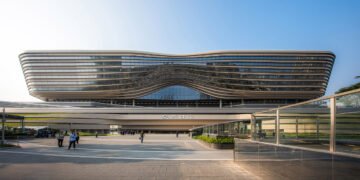
I've hooked up some footage which I hope exemplify microclimatic range. I don't assume they're significantly good. I'm engaged on assembling a extra passable catalogue.
submitted by /u/Bergliot [comments]
Source link