


Winter is usually a difficult time for fauna and flora alike.
Within the animal kingdom, critters similar to moose and weasels can have a tough time discovering meals, whereas creatures similar to myself can hardly say no to a number of helpings of heat soups and stews.
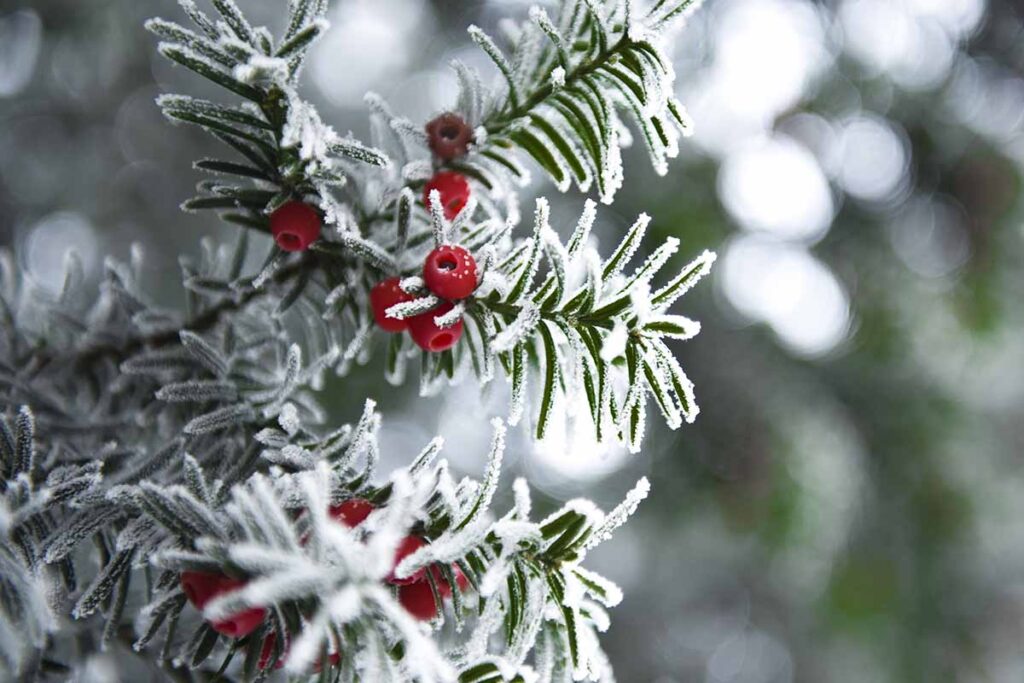
Within the botanical world, many vegetation typically face hazard by the hands of Previous Man Winter… even evergreen ones, just like the yew.
Taxus species are fairly tolerant of the chilly normally, with some which are hardy all the best way north so far as USDA Zone 2.
However each yew has its restrict when the mercury drops, and when that degree is reached, vegetation typically undergo damage within the type of browned foliage, sun-bleached needles, and broken-off branches.
Regardless of any wintertime tendency amongst gardeners to whereas away the coldest time of 12 months lounging indoors in cozy pajamas, you don’t need to take this injury mendacity down.
With some data concerning the causes of winter injury and the way it manifests, you may treatment any bothered vegetation in your panorama.
You may as well learn to forestall issues from the get-go.
However or that to occur, you’ll want a information. A smart, wrinkled, Yoda-esque guru can be good, however right here within the digital age with readers throughout, this text should do.
However hey – a minimum of this information gained’t use garbled syntax and backwards sentences… a lot.
Learn on, it is best to.
Addressing Winter Harm in Yews
Earlier than we dive right into a bunch of Taxus speak, a primer on find out how to develop yews can be useful, whether or not as a refresher or as a first-time introduction to the plant.
Yow will discover our yew-growing information right here. We’ll wait…
Oh, again so quickly? Let’s start!
1. Low and Fluctuating Temperature Harm
If it’s too chilly to your Taxus, then all the correct care on the planet gained’t do squat for the plant.
In case your yew is planted in an space with weather conditions that attain past its hardiness, then the water inside the foliage will freeze and develop in chilly climate, damaging cells in a means that results in desiccation and darkened foliage.
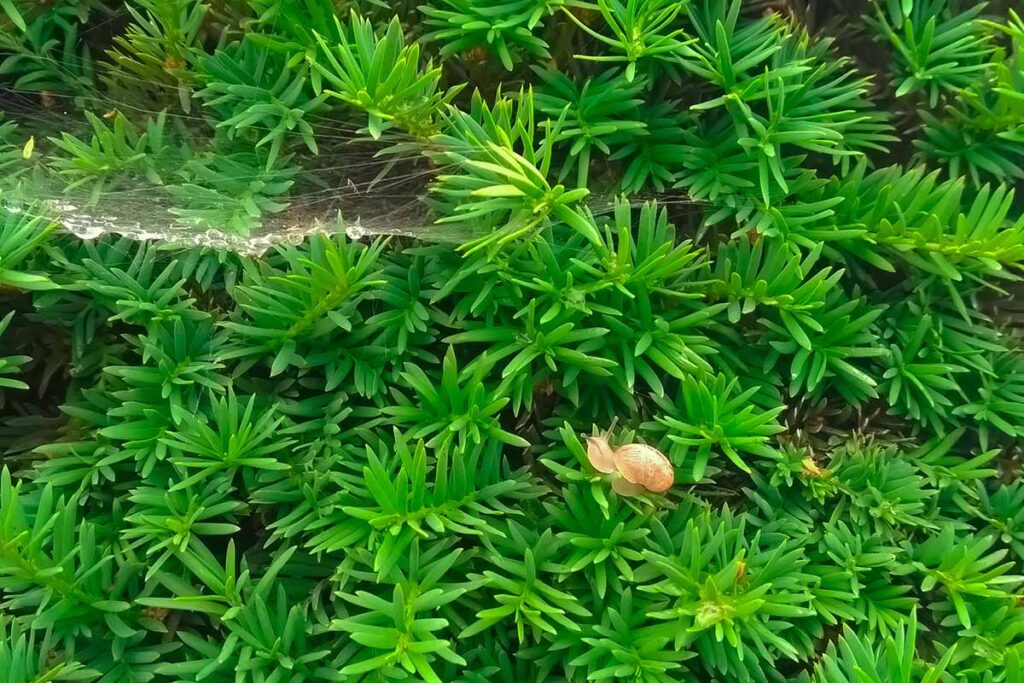
Fluctuating temperatures are one other potent risk – when heat daytime temperatures alternate with subfreezing circumstances at evening, the unacclimated tissues will undergo related damage.
Management any injury by pruning away injured tissues when the plant begins placing out new development in spring, however not earlier than.
If new needles haven’t began rising on the ordinary time of 12 months, take a fingernail to the bark of the broken branches.
Inexperienced tissue beneath signifies that the department remains to be alive and it could get well and placed on contemporary needles, whereas a brown shade means it is best to go forward and prune the lifeless department again to a residing bud or node.
If your entire plant has browned, it gained’t possible get well.
Take away it from the backyard and exchange it with a hardier yew or one other planting that’s well-adapted to your native circumstances as a substitute.
Now, let’s discuss prevention when it comes to this type of temperature-related wintertime damage.
In the beginning, choose a yew that’s hardy sufficient for its planting website. With out assuring this each time doable, the entire following tips are basically ineffective.

Planting on the improper time of 12 months is one other key offender which will lead vegetation to battle within the chilly, because it fails to provide the roots sufficient time to develop and develop into established previous to the onset of freezing temperatures.
Preferrred instances for transplanting embody early spring simply earlier than bud break, and late summer season simply earlier than the arrival of fall.
Pruning later within the 12 months, past the really helpful instances in spring and early summer season, can encourage new development that doesn’t have sufficient time to harden off earlier than the annual return of chilly temperatures.
Thus, late summer season and fall pruning are each no-nos.
It’s additionally essential to keep away from late summer season or fall fertilization, since fertilizing so late within the 12 months encourages new development that gained’t have time to harden off earlier than the chilly strikes.
2. Winterburn
Winterburn is what occurs if you mix harsh winter publicity with an lack of ability to attract up water from frozen winter soil.
Foliage that’s uncovered to solar and wind loses plenty of moisture, and with out entry to liquid H2O, these needles dry up, flip brown, and may even develop into bleached.
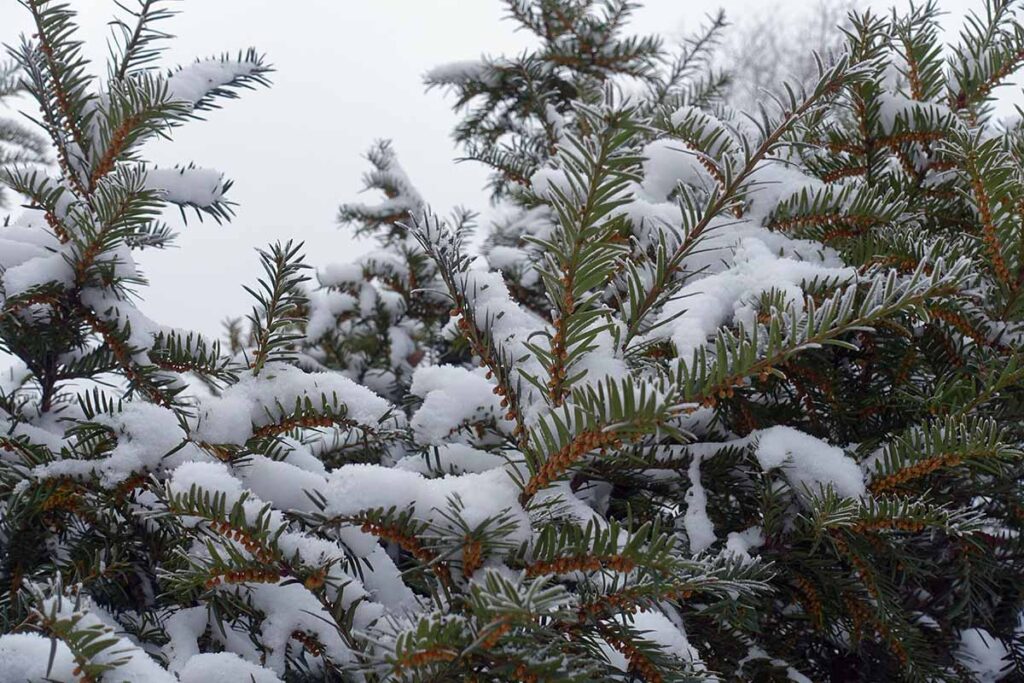
Danger elements for winterburn embody delayed dormancy as a consequence of heat fall temperatures, particularly harsh winds, and having shallow and/or poorly-developed root programs.
For injury management, prune away winterburned and necrotic buildings in mid-spring as soon as new foliage has been produced.
If everything of the plant is broken, dig it up and begin anew, both in a distinct location or with a brand new, hardier plant that’s suited to the planting space.
To forestall issues sooner or later, don’t plant yews in extraordinarily sunny or windy spots.
{A partially} shaded location in a courtyard protected against wind on the northeastern or jap facet of a construction can be the proper planting website.
Moreover, following the above-mentioned steps in correctly timing your planting, pruning, and fertilizing is important for winterburn safety as properly.

Making use of two to 4 inches of a free mulch similar to wooden chips or shredded bark across the root zone earlier than the onset of winter will assist to insulate the soil.
Be sure to unfold it out to the drip line of your yews whereas additionally protecting it three inches away from the trunk. Be certain that your vegetation are correctly hydrated earlier than the soil freezes.
Windbreaks set round any breeze-buffeted vegetation will assist to scale back wind injury.
4- to five-foot stakes – linked with mesh, canvas, or security fencing – stored a minimum of two toes away from the vegetation’ drip traces ought to work.
Different sturdy and hardy vegetation can also function windbreaks. You’ll clearly need to place these limitations on the edges of your vegetation which are uncovered to the wind.
3. Snow and Ice Breakage
Moreover the chilly damage that snow and ice can inflict, their bodily mass can do a quantity on a yew’s branches. When piles of snow or layers of ice develop into too heavy for a department – CRACK!
Even when the department doesn’t snap, the load of snow and ice can bend a Taxus out of practice, rendering it an unaesthetic mess.

When the snow is de facto coming down onerous, you might need to place down your scorching cocoa, head exterior, and brush any collected snow off of the tops of your yews each 4 to 5 hours.
A brush may also help to focus on any out-of-reach spots, however don’t be a hero and attempt to arrange a stepladder in the course of a blizzard or something.
This solely works for snow, although – ice can’t be disregarded.
Prevention and injury management are each carried out with pruning.
Earlier than the arrival of winter in an acceptable season for pruning, eradicating any weak branches out of your Taxus will be sure that the remainder of the plant that is still is hard sufficient to resist any winter weight.
After winter passes, you’ll need to take away any damaged or hanging branches for the sake of its well being and decorative aesthetics.
For severely broken or misshapen specimens, you may need to recruit assistance from an expert arborist for assist in getting the plant again into ship-shape situation.
4. Deer Feeding Harm
Come wintertime, deer begin working out of vegetation to eat.
Though they may normally go away yews alone the remainder of the time, deer aren’t above feeding on a Taxus in the course of the dormant season.

Whereas beforehand considered proof against yew poisoning, deer can truly be harmed by consuming Taxus taxanes.
Making use of deer repellent to at-risk vegetation and placing up deer fencing are each smart selections for controlling these critters and protecting them away.
Deer Scram granular deer repellent is accessible in six-pound tubs from Enviro Professional on Amazon, whereas our DIY deer fencing information will faculty you within the tremendous artwork of constructing Bambi barricades.
5. Salt Harm
What in case your Taxus manages to outlive all of that, solely to undergo injury from sodium chloride? Now that’s salt within the wound, proper there.
If I recall my days of de-icing pavements as a youth accurately, we’d unfold salt with excessive prejudice.
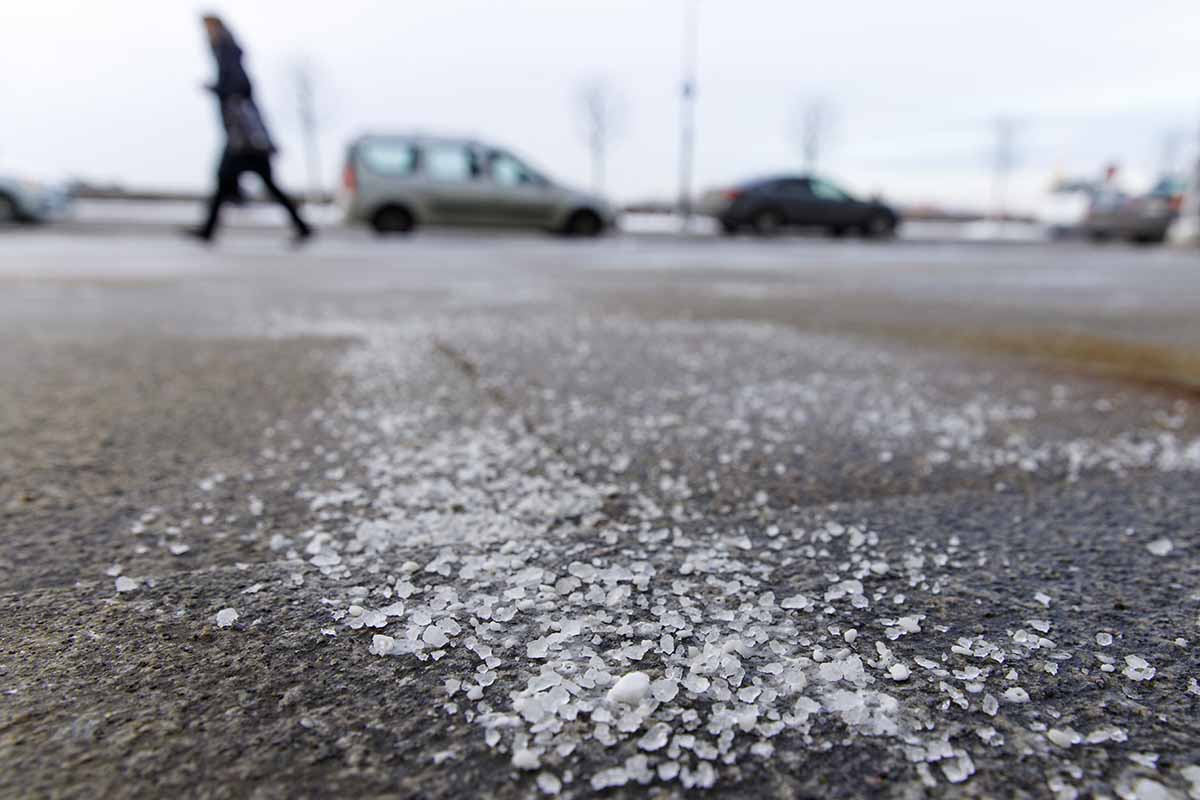
And generally, in our zeal for stopping slip and fall legal responsibility, some salt can find yourself close to vegetation within the panorama.
In yews, salts cut back root uptake of important minerals and trigger signs similar to desiccation, leaf browning, and department dieback.
To forestall salt injury, all the time train warning in the way you apply stated salt.
Alternatively, you should use coarse sand for added traction, or de-icing merchandise similar to calcium chloride and calcium magnesium acetate as a substitute of sodium chloride.
In case your yew is positioned beside a street or sidewalk, hanging up burlap in between close by stakes works as a bodily barrier that forestalls any splashed salts from hitting the plant or the encompassing soil.
A burlap barrier additionally is useful for stopping different types of yew injury similar to deer or sapsucker feeding and harsh winds, in case you want much more motivation.
For any inadvertently salted specimens, irrigating totally will assist cut back salt ranges within the soil, and it could even serve to flush out the salts altogether in well-draining soils.
Beating the Chilly: It By no means Will get Previous
Avoiding frostbite, lastly recovering from the widespread chilly, saving a yew from winter injury… all of those wintertime accomplishments will be extraordinarily satisfying.
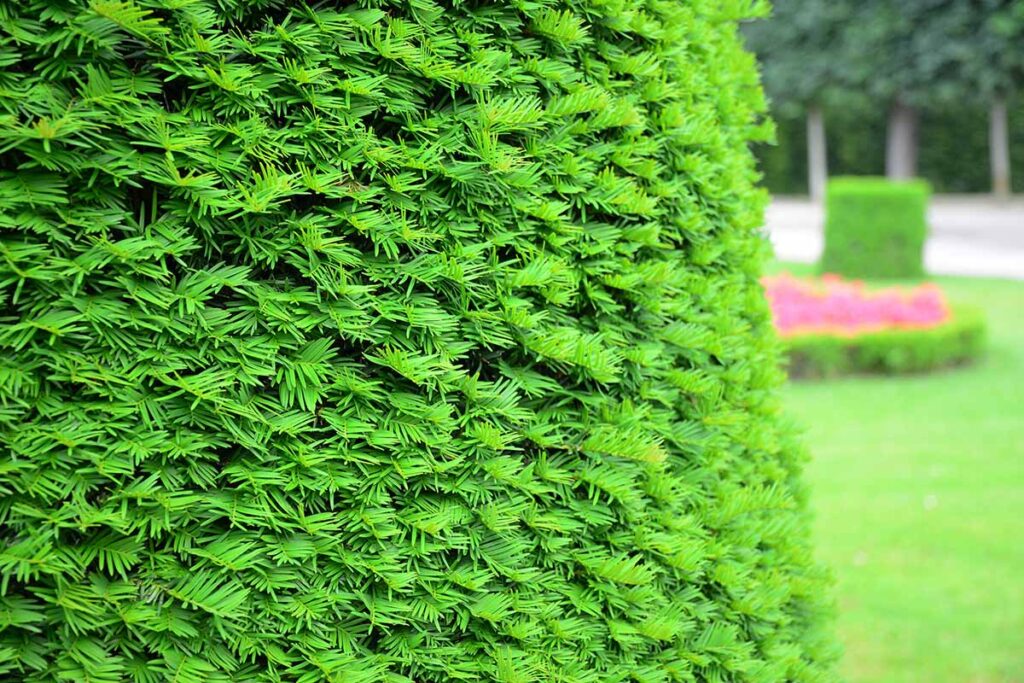
Take pleasure in protecting your Taxus evergreen! Any errors you make can function a useful lesson for the longer term, so don’t be afraid of errors. Embrace that “development” mindset!
Questions, remarks, insights of your personal to share? All of that and extra can go into the feedback part beneath.
And for additional evergreen shrub data, have a gander at some extra guides that we’ve whipped up:
© Ask the Consultants, LLC. ALL RIGHTS RESERVED. See our TOS for extra particulars. Initially printed December 21, 2022. Final up to date November 27, 2026. Uncredited photographs: Shutterstock.