

 I’VE NEVER HAD a rock backyard, I confess, however a e-book a few fashionable and excessive type of the artwork caught my consideration when it was printed. It’s known as “The Crevice Backyard: Make the Excellent Dwelling for Crops from Rocky Locations,” and its authors joined me in a dialog on this reprise version of the podcast about why you may wish to make room for one, and the vegetation it could possibly help.
Colorado-based Kenton Seth and Paul Spriggs from British Columbia are backyard designers with a specific specialty in rock gardens.
When the pair appeared on the favored Backyard Masterclass webinar collection, British host Noel Kingsbury mentioned this in his approach of introducing them: “Rock gardening will now not elicit a yawn as a result of that is the long run.”
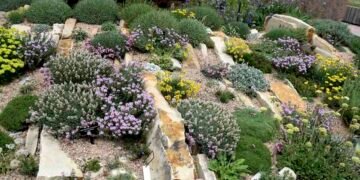
We did a “New York Instances” backyard column collectively just a few years in the past, and I needed to be taught extra. I used to be so glad to speak with them in 2022 to offer us a peek into this courageous new world. (Above, from the e-book, a part of a crevice backyard at Denver Botanic Gardens.)
Plus: Enter to win a duplicate of the brand new e-book by commenting within the field close to the underside of the web page.
Learn alongside as you take heed to the Oct. 26, 2026 reprise version of my public-radio present and podcast utilizing the participant beneath. You’ll be able to subscribe to all future editions on Apple Podcasts (iTunes) or Spotify (and browse my archive of podcasts right here).
Plus: Enter to win a duplicate of the e-book by commenting within the field close to the underside of the web page.

 crevice gardens, with paul spriggs and kenton seth
Obtain file | Play in new window |
Subscribe: Apple Podcasts | Spotify
Margaret Roach: Thanks for getting up early within the morning, as a result of I do know you’re hours sooner than we’re. To start out, and I don’t know who needs to reply which query so you possibly can alternate or no matter: What’s the elevator pitch of what a crevice backyard is, say, in comparison with a extra typical rock backyard. What’s a crevice backyard?
Paul Spriggs: Kenton, you wish to take that one?
 Kenton Seth [above]: Yeah. The true elevator speech to the layperson who’s not a gardener, I wish to say it’s like a bonsai-ed mountain to develop vegetation from rocky locations, often little rock vegetation. Miniaturized mountain ranges in folks’s backyards, I believe is a straightforward method to describe it, or at the very least that’s how I’d see it if I got here from the overall exterior.
Paul: After which after all, it’s additionally an improved fashion by way of its capability to develop these difficult-to-grow vegetation. So far as my elevator pitch would go for somebody moving into rock gardening, they could discover {that a} backyard constructed strictly out of crevices is one of the best ways to achieve having that sort of a plant assortment.
Margaret: O.Ok. So once you say simply crevices, I’m taking that there’s extra rock than in your common rock backyard, and the planting areas are tighter in a crevice backyard, as in they’re crevices solely.
Paul: Precisely. A conventional rock backyard is, for all intents and functions, a mound of soil simply lined up with rocks and gravel, and it actually serves the aim for many vegetation. However a crevice backyard, the rocks are all buried very deeply to create that deep crevice situation that a variety of these vegetation from rocky locations actually choose.
Margaret: You had an allusion within the Instances story, and after we had carried out the interview for that, you guys talked about sedimentary rock, or rocks which might be stratified, and the picture of a like a dish drainer with plates in it. Are you aware what I imply? You’re speaking about how they’re buried. So inform me about that.
Kenton: That’s a great way to explain, I assume you’d say mainstream, or conventional, or the nascent type of crevice gardening the place linear, slab-like stones have been stood on finish. And that concept was impressed from pure locations that seem like that. However crevice gardens have gone past that, too. They’re not simply vertical stones anymore. There’s horizontal and diagonal and spherical stones and blocky stones. Most basic crevice gardens are recognizable with that kind of conventional fashion.
Margaret: O.Ok. Lots of people requested this within the feedback on the Instances story: Are these just for locations like Colorado or mountainous, rocky, harsh?
Kenton: Oh, no.
Margaret: Are these for anyplace?
Kenton: Paradoxically, they have been developed in additional delicate locations, to develop vegetation from the cruel locations. So that they began in nicer climates actually, to be trustworthy. They’re utilized in Europe, in lowland components of Europe within the cities there to develop vegetation from the mountains. It simply seems that physics is similar in every single place, and what makes the crevice work there makes it work the place I’m at in the actual dry, arid West as effectively. So that they’re fairly common.
Margaret: So Paul, the place in a house panorama can we match one? I do know many botanical gardens have them and are utilizing them for numerous functions, together with preservation and conservation of imperiled species and so forth. However the place in a house panorama can I put a crevice backyard? How a lot room do I’ve to have and so forth?
 Paul [above]: Properly, you possibly can have as huge or as small as you need. And like several backyard characteristic, it has to suit into your total panorama in order that it doesn’t stand out like a sore thumb. Clearly, should you’re only a plant collector, and also you don’t care about how your backyard actually seems to be, effectively, then that’s not as a lot of a difficulty. However for me, it wants to suit into the backyard, and the crevice backyard can match into all kinds of locations.
If it’s a small backyard, it may be tucked up close to a storage door or a entrance entranceway to the home, alongside the facet of a pathway or a driveway. Or it could possibly be its personal free-standing characteristic out in the midst of a big expansive garden or in a big gravel meadow. There’s actually all types of locations it could possibly go, so long as it doesn’t really feel squished in there and so long as it isn’t up towards a variety of timber, it actually needs to face by itself, so to talk. Lots of these gardens just like the brightest, fullest sort of situations you will get. So it actually matches in in all types of locations as a focus and a good way to develop vegetation.
Margaret: And also you guys sort of alluded to this a bit of bit, so the rocks, whichever form, are buried partly within the floor, however they’re not buried in a flat canvas of soil. That is mounded, like a berm, this isn’t one thing that’s flat to the bottom, proper? [Below, soil is mounded up before rocks are partially buried, to make a crevice garden.]
Paul: Positively not.
Kenton: No, not often. You may, however then it’d be a patio [laughter].
 Paul: Precisely.
Margaret: “ construct a patio” with Kenton and Paul.
Paul: We’re attempting to construct dramatic, natural-looking for probably the most half, options. And the mountains are our inspiration for that. And so basically, I consider it as like a miniature mountain, I attempt to construct one thing that appears prefer it could be laborious to climb.
Margaret: O.Ok.
Kenton: And for people in moist climates, constructing it up that will increase the drainage. The floor drainage will dry out the backyard for these vegetation and is actually useful.
Paul: And it additionally offers the depth that these vegetation want. Lots of them are faucet rooted fairly deeply. So the crevice backyard will give them that depth that they want.
Margaret: So that they get a deep root run in these tight areas. And in there may be not our typical soil that we’ve all been taught as gardeners [laughter] to attempt to create extremely natural humus, no matter, these are vegetation from lean, imply spots, sure? That we’re going to be rising? And we’ll speak extra about which vegetation in a minute.
 Kenton: Yeah, they like junk [laughter]. A few of them are rising in pure gravel within the mountains. Paul and I, after we did analysis for the e-book and traveled round and met folks, most locations, folks used pure sand, builders sand, because the rising media.
However then in locations which might be a bit of drier in local weather, like me and even Central Europe, I began utilizing extra rock dusts, gravel fines, if you wish to name it that. And a few of them would use tiny, tiny bits of compost in the event that they’re rising sure vegetation, however not often. It was often minerals and it was often rock mud.
Margaret: So not an natural soil, not a variety of compost and humus and all that.
Kenton: Compost is an exception when it reveals up in crevice gardens.
Paul: Yeah. All that vitamins will trigger the vegetation to develop out of character, if not outright kill them.
Margaret: Which is why a few of the vegetation which might be grown in crevice gardens, we could have killed them in a yr or two or three or much more rapidly in our typical backyard beds, proper? These alpine vegetation particularly, they’re not going to tolerate our conventional backyard beds.
Paul: Properly, killing vegetation is a part of gardening in my expertise.
Margaret: [Laughter.] It’s by no means occurred to me. I’ve by no means. No.
Paul: No, after all not.
Margaret: No.
Paul: Each time you kill a plant, you be taught.
Kenton: It’s the one method to know the boundaries.
Paul: That’s proper, precisely.
Margaret: Yeah. So simply in order that we might visualize if we have been getting began, what can be a few of the issues that I would put in my preliminary crevice backyard? If I made this berm, this outcrop sort of a backyard, with these partly buried stones and a fast-draining medium, what can be a few of the candidates?
And I do know that it may be very uncommon, treasured issues that you simply all get from seed exchanges from the North American Rock Backyard Society members and all types of wishlist vegetation, however for inexperienced persons, not that superior stuff.
Paul: I’d say should you’re a newbie, there’s a complete suite of what I name garden-center alpines, that you simply stroll into the backyard middle they usually’re all of their little 4-inch pots, like Armeria maritima, and the creeping thymes, and people kinds of issues. If you need that immediate mountain look, these are good starters. Sempervivum, like hens and chicks are a wonderful candidate for a newbie crevice gardener.
However folks usually, as they transfer via that journey, then they slowly wish to develop more difficult, harder and issues that will not be simply out there. So there’s a complete gamut of issues. However for inexperienced persons, I’d say Sempervivum might be one of the best plant for the crevice backyard.
Kenton: Yeah. I nonetheless love them.
Paul: No disgrace.
Margaret: They’re superb. Little dwelling sculptures, proper?
Paul: Yeah. And so they match the invoice so completely in that they’re considerably disposable they usually’re really easy to propagate that should you want a spot for them, you simply plunk them in anyplace simply to fill the area. After which should you want a spot for a greater plant, out they arrive after which no love misplaced.
Margaret: What about a few of the hardy ice vegetation? They’re kind of succulent-y, proper?
Kenton: Yeah. Lots of them which might be commercially out there could be quick rising carpets, however there’s some new hybrids now that keep a bit of extra compact and there’s some species that keep smaller that’d be extra applicable for the crevice backyard. Like Delosperma congestum, yeah, these guys love a crevice backyard. They do nice in there.
Margaret: And a few of the little backyard pinks, I like a few of the little bun-shaped flowering issues. Are you aware what I imply? The little Dianthus, the little Campanula. As a result of it’s so preposterous that there’s this factor on this pocket of rock, after which all of the sudden it sends up these flowers.
Kenton: There appears to be a rock backyard or miniature model or species of most backyard perennials. There’s miniature verbascums, even, or miniature Digitalis. You nailed it although, pinks and bluebells are basic and superior.
Margaret: So the Dianthus and the Campanula, is that what they’re known as?
Paul: Oh, yeah. They’re classics. There’s so many species. And rock gardeners have been rising them for 100 years [laughter].
Margaret: And also you guys develop woody vegetation in these gardens too, don’t you? That’s what blows my thoughts. It’s like, how on the planet did you get these to develop in there?
Paul: Properly, for me personally, it’s all in regards to the dwarf shrubs. If I used to be to decide on two that have been actually those that I like one of the best it might be any collection of dwarf conifers, and Daphne can be considered one of my favourite genera as effectively. And so they’re all very effectively suited to the crevice backyard, offered they’re in scale with the backyard. You don’t need them to overgrow, however so long as they keep small, they’re good. And the woodies are nice, since you do see these in nature in these excessive environments usually represented as a krummholz, which is a windswept, wind-pruned tree approach up on the mountain crest.
Margaret: And what’s that phrase?
Paul: Krummholz. It’s a German phrase. It means crooked wooden [laughter].
Margaret: Oh, O.Ok.
Kenton: You recognize these timber you see up at treeline which might be blown sideways? All of the leaves or needles are solely on one facet. They’re sort of naturally bonsai-ed.
Paul: And a tree that within the valley backside can be 150 toes tall is 2 toes tall up there [laughter], and possibly the identical age.
Margaret: Wow.
Kenton: You’ll be able to convey that spirit of the mountains right down to your backyard.
Paul: Yeah. That’s the entire thought. One in all them.
Margaret: So like dwarf Alberta spruces?
Paul: Sure.
Margaret: And what else? Some examples.
 Paul: Properly, all of the conifers, pines, spruces, cedars, Cryptomeria, all of them have dwarf variations. Usually they’re witches’ brooms which were found in nature, after which folks can graft and take cuttings of these authentic dwarf witches’ brooms, they usually retain their character within the backyard.
Margaret: Simply inform all people what a witches’ broom is.
Paul: It’s a parasitic progress on a bunch tree, which principally creates a progress that’s mutant, however usually extremely fascinating, as a result of they’re basically dwarf variations and sometimes bun-forming or pendulous variations of the mom tree. However once you take a reducing or graft off of these, they maintain the character. And so then you definitely’ve bought your self a dwarf conifer [laughter].
Kenton: It’s cool how splendidly out there these are within the states proper now. I see them at a variety of backyard facilities. And possibly they have been producing to ramp up for the fairy gardening motion or the bonsai gardener. So these are properly out there.
Margaret: So I’m not getting out my huge, long-handled shovel. And I’m not beginning with a 5-gallon pot of some woody plant, or for that matter, even with the Dianthus or the Campanula, or the fingers and chicks or no matter. I’m not beginning with most likely even a courtroom pot, not to mention a gallon. That is small. We’re going to tuck small issues in with small instruments and small vegetation. How does that work?
 Kenton: Properly, and it additionally jogs my memory to level out that the smallest crevice gardens could be in a pot themselves. So all the pieces could be even tinier than tiny. However as you have been mentioning, all of the work in a crevice backyard and the upkeep is simply miniaturized. As a substitute of wheelbarrows of cuttings, you might have a handful of cuttings. And infrequently can we ever plant vegetation which might be in a pot bigger than a 2-inch pot. [Above, from the book, container crevice gardens by designer Chris Dixon.]
Paul: And when you concentrate on these crevices, they’re just one inch large as a rule. So such as you say, you possibly can’t put a 1-gallon pot in there. Properly, you possibly can should you bare-root it and you actually modify the roots. However sometimes, all the pieces’s carried out in both 2-inch pots and even straight as seedlings which were germinated in a separate pot or as rooted cuttings. These are all other ways. And positively these final two methods are nice since you’re speaking about such a small root space that will solely go down 4 or 5 inches and principally doesn’t actually broaden sideways in any respect. So planting seedlings and cuttings is a good way to get the backyard going, though you do should child them as soon as they’re in for a bit.
Margaret: I used to be going to say, these are water-wise, so to talk, low-water-usage gardens as a result of they’re mimicking these locations in nature the place it’s harsh and so forth. And the medium is fast-draining and so it’s not absorbing and holding a variety of water. However at first, what do I’ve to do? So I’ve bought these virtually bare-rooted issues, these younger issues, I’ve tucked them into these 1-inch gaps, these areas of planting medium between these rocks. What do I’ve to do to get them acclimated? Do I’ve to water initially for some time?
 Kenton: You certain do. All vegetation, regardless of how powerful they’re, are tender after they’re infants, even when they’re cactus or whatnot. So that they do require a little bit of babying up entrance. However we discover they set up fairly rapidly in a rock backyard scenario, particularly in the event that they’re bare-rooted and put in with out their potting combine, they set up fairly properly. And you may often inform. My rule of thumb is that if the plant bought larger, it’s extra established.
Paul: Yeah. As a result of a variety of these rock backyard vegetation, even once you develop them from seeds, two months after germination, you’ll have a plant that’s simply half an inch excessive, however then the basis is 8 inches lengthy already. So the purpose is that they hearth the roots down, and I consider the crevice encourages that deeper rooting and fast rooting, which principally makes them much less liable to desiccation when situations get powerful.
Margaret: O.Ok. So that you’ve labored on, you simply talked about it may be as small as a container backyard. And clearly we wouldn’t use probably the most fragile, delicate container. It’d most likely be a trough, or I like the thought of a galvanized tub, nearly like a horse trough sort of a factor with rocks.
Kenton: We’ve seen some stunning ones recently of the horse troughs, or painted copper and whatnot, they’re simply attractive. It simply additional elevates this little mountain. Yeah, very cool.
Margaret: Yeah. And it brings it up, due to these little treasures, it brings it up nearer to eye view, in order that we will actually have a look at them, we don’t should crawl round to take a look at them. It’s sort of enjoyable.
Kenton: Precisely.
 Margaret: Yeah. And we’ve talked about rock, rock rock. One of many gardens that you simply turned me on to, that I believe you’ll have consulted on, or did seek the advice of on, that used recycled concrete from an outdated basis and I believe an outdated parking area. In different phrases, they didn’t usher in rock. It may be costly, and a few locations it’s not extensively out there and so forth. This was at Plant Delights Nursery, or their Juniper Stage Botanic Backyard in Raleigh, North Carolina. And so they used all this recycled chunks of concrete they usually made, I believe, what’s it, 300 toes lengthy or one thing, this factor [laughter]? [Above, part of the Juniper Level crevice garden.]
Kenton: I can’t even hold monitor. We’re fairly certain that’s the most important crevice backyard on earth now. Yeah. And really, that wasn’t actually even the primary huge damaged concrete set up. The Dutch ought to get credit score for it, the College of Utrecht, as a result of they don’t have rocks in Holland, they constructed these damaged sidewalk concrete spheres out of damaged concrete, with these stunning spheres of vegetation rising out of them. They did that some time in the past.
In order that’s a factor, for certain, simply for example your level that the place rocks usually are not out there or are too costly, damaged concrete’s in every single place there are people. What I like about that’s it ranges the enjoying subject. So even should you don’t have an enormous price range otherwise you’re not in a area the place rocks are straightforward to get, damaged concrete’s nice. And you may see it as an ecological factor, too, since concrete is thought to be such a giant resource-intensive materials that we create.
Margaret: Proper, to upcycle it like this and put it to use.
Kenton: Precisely. Some rock backyard mates have jokingly known as it “anthropocene limestone,” as a result of it capabilities the identical approach.
Paul: We additionally name it “urbanite.”
Margaret: Urbanite, proper.
Paul: It will possibly look very pure. The damaged ends of a bit of concrete can principally seem like a rock when it’s all put collectively correctly.
Kenton: You’ll be able to go each methods with it.
Paul: Yeah. You’ll be able to idiot folks [laughter].
Kenton: It’s superb.
Margaret: So I wish to simply speak a bit of bit about if folks wish to be taught extra they usually wish to get entangled, I used to be actually impressed that you simply’ve began this group, I don’t know what number of years in the past you began this Fb group [Modern Crevice Gardens], and there’s lots of people in that. And plus, that, and likewise the assets of attending to know the North American Rock Backyard Society, which has 30-something chapters across the nation and nice web sites and all types of studying data. Inform us a bit of bit about if folks wish to develop into a part of this group, both just about or in individual.
Kenton: There are, such as you level out, mountains of knowledge and good folks on the market for this, which is shocking for what looks as if such an esoteric gardening fashion [laughter]. However you talked about the Fb web page that Paul and I began known as Trendy Crevice Gardens.
There’s a rock-garden membership in most English-speaking international locations, or all of them, and there could be native chapters. It’s price searching them down. You talked about NARGS, North American Rock Backyard Society. And there’s one in England and Scotland and there’s a French and a German and Czech model, too. Yeah, there’s a variety of pleasant folks on the market to show you or simply hook you up with the suitable books.
Paul: And I really feel that it’s truly necessary should you actually wish to get into stuff to affix a kind of golf equipment, as a result of this isn’t mainstream gardening. This isn’t the sort of factor the place you stroll right into a backyard middle and also you’re going to see a crevice backyard. Possibly sooner or later you’ll.
However a variety of the vegetation are simply straight up not out there. And so you really want to know folks to have the ability to make these connections, as a result of there’s a variety of exchanging of vegetation, exchanging of seeds, all that sort of factor. And should you’re simply an island unto your self on the market and never related with the group, you simply could discover it more durable to make the progress that you simply wish to make on this world.
Kenton: The educational’s such an ongoing journey, too. It’s good to hunt that mentorship. I believe that’s why we find it irresistible a lot, is that you simply’re by no means carried out studying about it. There’s at all times a brand new group of vegetation.
Margaret: Only a remaining thought, and it pertains to the Plant Delights concrete upcycled crevice backyard galore [laughter], is that it may be a retaining wall, which that kind of does function. As a substitute of constructing a concrete or brick wall, you may make it permeable, so to talk, and planting it and make it a stay factor. Which I like that.
Kenton: I believe that could be one of many freshest issues about it’s a crevice backyard as habitat. As a result of I believe a variety of Individuals are pondering of their gardens now as potential habitat for pollinators, birds, and so on. And a few people have identified for a very long time that crevice gardens entice the lizards and the butterflies to heat their wings and the spiders that eat their pests.
Paul: And that the ground-burrowing bees.
Margaret: Sure, sure.
Kenton: Oh yeah. That’s the place they go in my backyard for certain. They go to the crevice backyard.
Margaret: [Laughter.] Properly, Kenton Seth and Paul Spriggs, the authors of the brand new e-book, “The Crevice Backyard: Make the Excellent Dwelling for Crops from Rocky Locations” [affiliate link], which we’re going to have a giveaway of. I’m so glad we did the piece for the Instances as a result of I really feel like that is one thing that folks must find out about. And I believe it has a job in a variety of totally different locations, as you’ve been saying. So thanks. Thanks for making time as we speak.
Paul: Thanks for having us.
Kenton: Thanks a lot. It’s been a deal with.
be taught extra about crevice gardens
enter to win a duplicate of ‘the crevice backyard’
Do you might have any sort of rock backyard in your panorama?
No reply, or feeling shy? Simply say one thing like “rely me in” and I’ll, however a reply is even higher. I’ll choose a random winner after entries shut at midnight Tuesday, Nov. 3, 2026. Good luck to all.
(Disclosure: As an Amazon Affiliate I earn from qualifying purchases.)
choose the podcast model of the present?
 MY WEEKLY public-radio present, rated a “top-5 backyard podcast” by “The Guardian” newspaper within the UK, started its seventeenth yr in March 2026. It’s produced at Robin Hood Radio, the smallest NPR station within the nation. Hear domestically within the Hudson Valley (NY)-Berkshires (MA)-Litchfield Hills (CT) Mondays at 8:30 AM Jap, rerun at 8:30 Saturdays. Or play the Oct. 26, 2026 present utilizing the participant close to the highest of this transcript. You’ll be able to subscribe to all future editions on iTunes/Apple Podcasts or Spotify (and browse my archive of podcasts right here).